This is a design mockup. Ladder & Skimmer is an invented business. Every price, ideal range, chemical instruction, address and telephone number below is a placeholder and none of it is safe to act on.
Ladder & SkimmerPool service · Smithville, Missouri
Seven numbers decide everything about your pool. You already own the kit that reads them.
What each one should be, what it means when it is wrong, and which four of the seven you genuinely cannot fix with a bucket from the shop.
Before the sales part
Three of these you can fix yourself this afternoon. We would rather you did.
A pool company that treats every reading as a service call trains its customers to ring for things that cost eleven dollars to solve, and then loses them the year they work out what happened. So the seven parameters below say plainly which ones are a homeowner job and which ones are not, and the ones that are not are not a conspiracy: they involve draining, plumbing, or a chemical that will bleach a lawn.
The single most useful thing on this page is the third one down. Cyanuric acid is the reason most green pools in this county are green, almost nobody tests for it, and no amount of chlorine will do anything at all until it is dealt with.
The strip, read out
What the seven numbers mean.
Ranges are for a residential vinyl liner pool, which is most of what is in the ground around Smithville. Concrete and fibreglass differ on two of them and it is noted where they do. Test in the morning, before anybody swims and before the sun has been on the water for six hours.
1. Free chlorine
2 to 4 ppm
The only one most people test, and the one that tells you least on its own. Free chlorine is the sanitiser that has not yet been used up. A reading of zero on a hot Saturday is not an emergency and a reading of zero on a warm Tuesday is, because the question is not what the number is, it is how fast it got there.
Reads low or zero
Something is consuming it: swimmers, sunlight, rain, or algae that has not gone visible yet. Look at number three before you add anything, because if stabiliser is high the chlorine you add will not work.
Reads high, over 5
Usually the day after a shock and it is fine. Over 10 and it will strip a liner's pattern and bleach swimsuits. Do not swim, take the cover off, and leave it in the sun.
Homeowner jobYes. Liquid chlorine from any shop in town.If you would rather notincluded in the weekly route
2. pH
7.4 to 7.6
How acidic the water is, and the setting that decides whether the chlorine you paid for does anything. At pH 8.0 roughly a fifth of your chlorine is active. At 7.4 it is over half. People chase a chlorine number for a fortnight when the actual problem is one bottle of acid.
Reads high, over 7.8
The common direction, because plaster, fresh fill water and every aeration feature push it up. Water goes cloudy, scale forms on the tile line, eyes sting, chlorine stops working.
Reads low, under 7.2
Rarer and worse. Acidic water etches plaster, corrodes the heater's exchanger and eats the liner's pattern. A heater failure on a five year old unit is usually this, and it is not covered.
Homeowner jobYes, carefully. Muriatic acid down, soda ash up, added at the return with the pump running.If you would rather notincluded in the weekly route
3. Cyanuric acid (stabiliser)
30 to 50 ppm
The one nobody tests, and the reason for most of the genuinely stuck pools we get called to. Cyanuric acid shields chlorine from sunlight, which is useful up to a point and then becomes a trap: it never leaves the water on its own. Every stabilised tablet you drop in the skimmer adds more, permanently, all season, every season.
Reads high, over 80
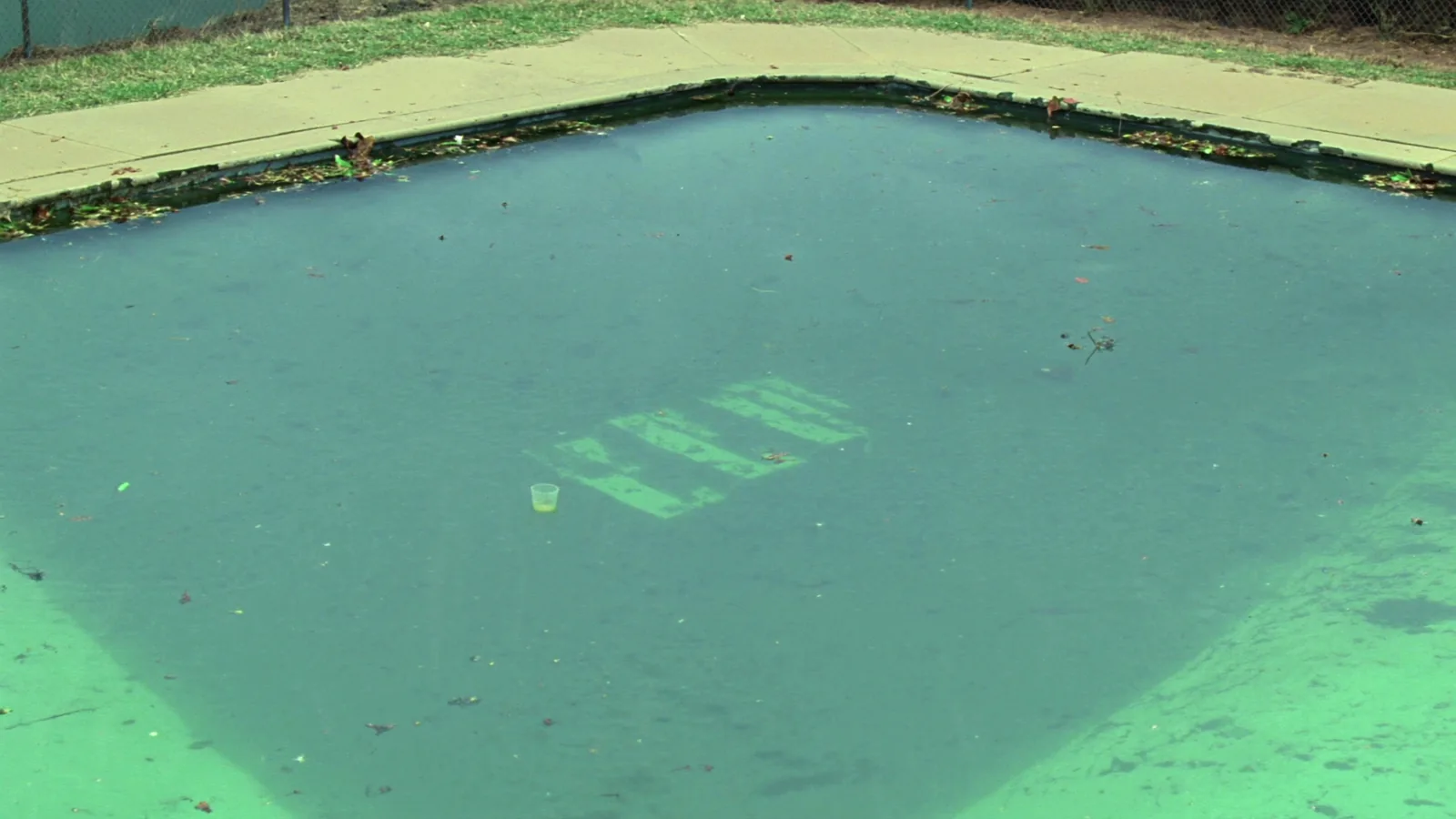
Chlorine lock. The chlorine is in the water, the test says so, and it is chemically unavailable. You can shock this pool three times and it will still be green on Sunday. There is no chemical that removes it.
Reads low, under 20
Chlorine burns off in a single sunny afternoon and you are refilling daily. Common in the first month after a liner change, and it is a genuinely cheap fix.
Homeowner jobLow, yes. High, no: the only cure is draining and replacing part of the water.Partial drain and refill$260 to $420
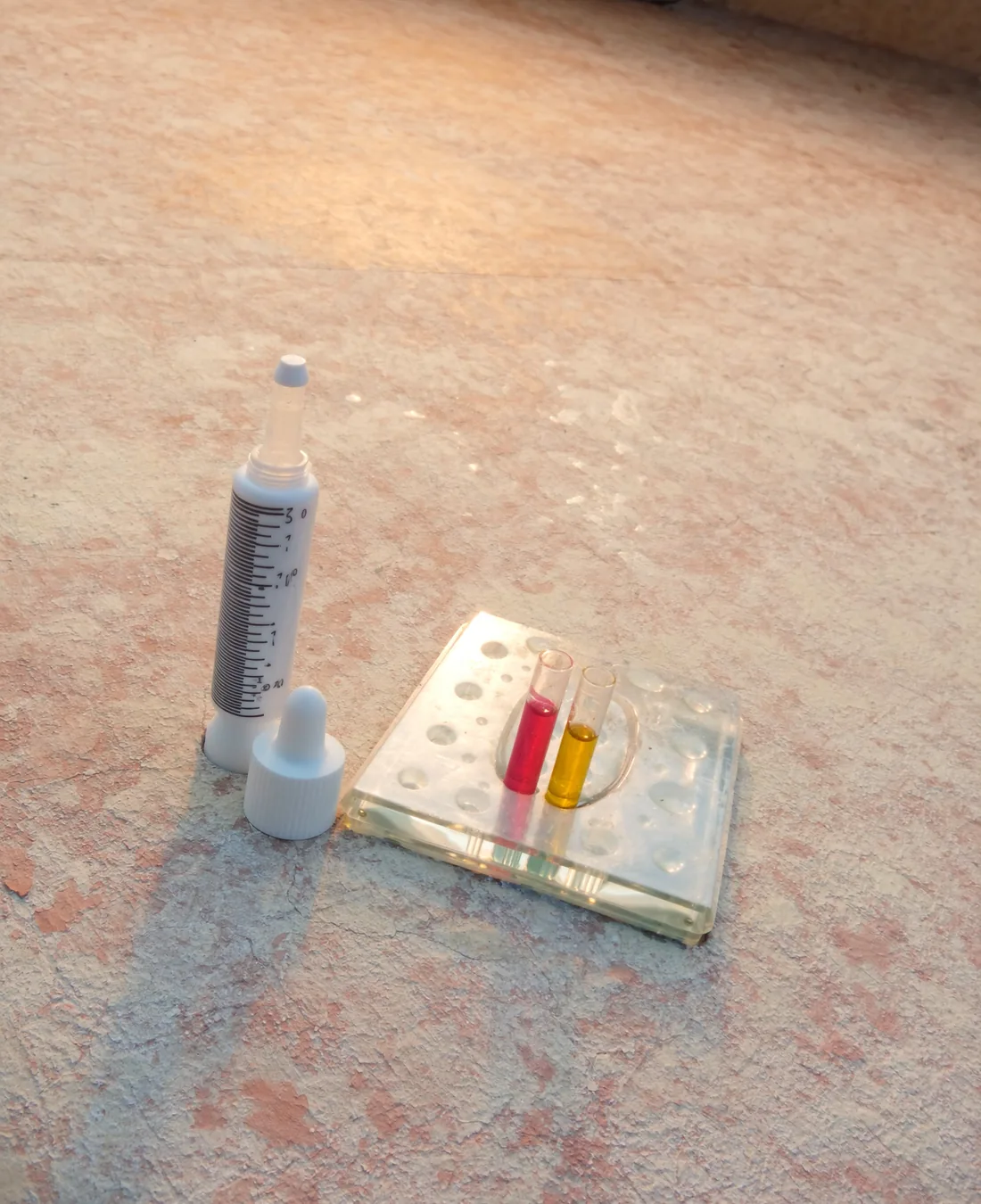
The two-vial kit reads chlorine and pH only. It cannot see the third number on this page, which is why the third number goes unnoticed for years.
Bring us a sample instead of guessing.
Half a litre in a clean bottle, taken elbow deep away from the returns, brought in the same day. We run all seven on the bench and hand you a printed sheet with the actual numbers and what to do, whether or not you buy anything.
There is no charge for this and there is no charge for it in July either, which is when everybody needs it and when several places in the metro start charging for it.
This is what number three looks like from the kitchen window in April. It is not a chlorine problem and adding chlorine will not touch it.
4. Total alkalinity
80 to 120 ppm
The buffer that stops pH moving. Get this right and pH mostly holds itself; get it wrong and you will be adding acid twice a week and wondering why. Set alkalinity first, then pH. Doing it the other way round is the most common sequencing mistake in the trade.
Reads high, over 150
pH climbs no matter what you do and the water goes hazy. Corrected slowly, with acid, over about a week. Doing it in one go crashes the pH and etches the surface.
Reads low, under 60
pH bounces between 6.9 and 8.2 within days. Baking soda, and a lot of it: a 20,000 gallon pool takes around fourteen pounds to move it 40 ppm.
Homeowner jobYes, both directions, with patience.If you would rather notincluded in the weekly route
5. Calcium hardness
175 to 275 ppm on vinyl
How much dissolved calcium the water carries. On a vinyl liner this matters less than the internet says it does, and on plaster or a heated pool it matters a great deal. Concrete pools want 200 to 400. Water with too little calcium will take it from whatever it can reach.
Reads high, over 400
Scale on the tile line, on the heater element and inside the salt cell. Feels like sandpaper on the steps. Only cure is dilution, same as number three.
Reads low on a plaster pool
The water dissolves the plaster to get what it needs, and the surface goes rough and patchy. Calcium chloride, and it is cheap.
Homeowner jobLow, yes. High, no: dilution again.Scale removal and cell clean$95 to $180
6. Filter pressure
Clean reading, plus 8 to 10 psi
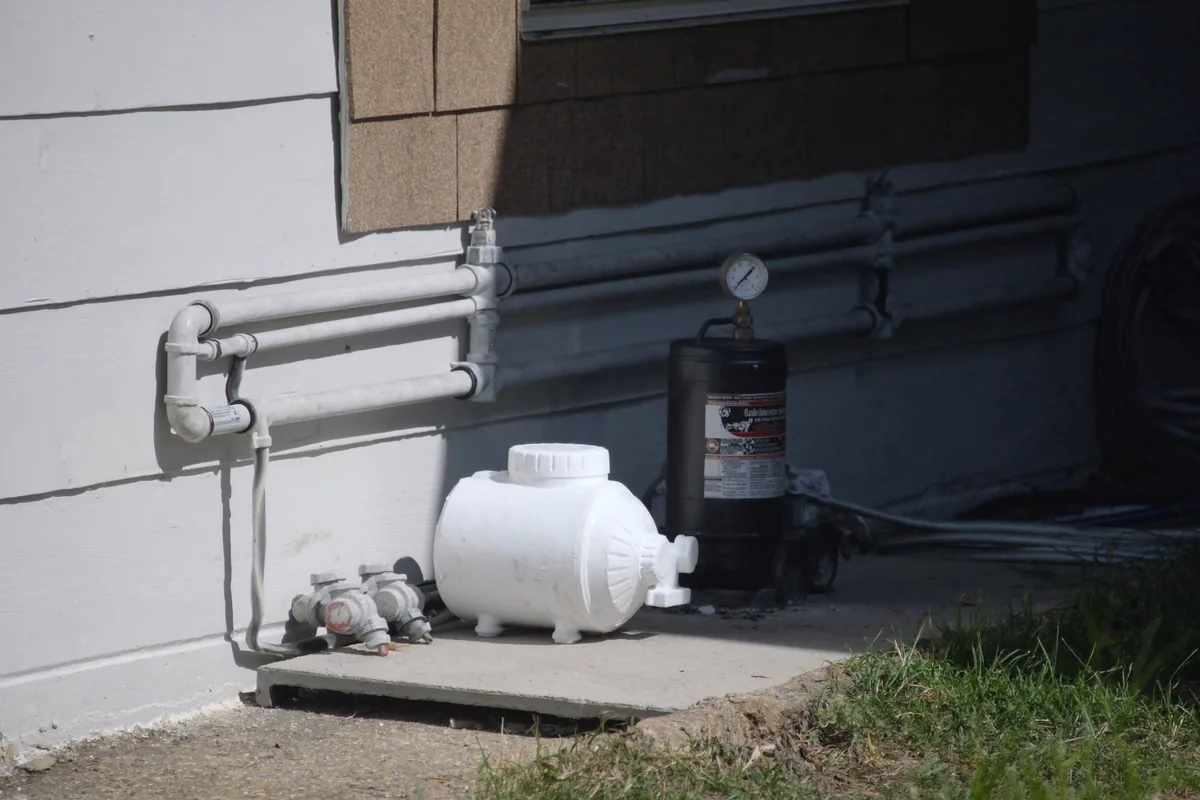
Not a chemistry number, and the one that gets ignored longest. Write down what the gauge reads the day after a backwash or a cartridge clean. That is your baseline. When it sits 8 to 10 psi above the baseline, clean it. Not on a date, on that number.
Climbing steadily
Normal. The filter is doing its job. Backwash a sand filter, hose a cartridge, and expect to be doing it more often in July than in May.
Falling, or low with poor flow
Not good news. A blockage before the pump, an air leak on the suction side, or a torn cartridge letting water past. A pump running dry destroys itself in under an hour and that is a $600 to $1,100 morning.
Homeowner jobCleaning, yes. Anything that involves opening the pump, no.Diagnostic call$85, waived if we do the work
The gauge on top of the filter is the number in the paragraph above. Write down what it reads the day after a clean and tape it to the wall beside it.
Photograph your equipment pad once, this week.
One picture of the pump label and one of the filter label, kept on your phone. It turns a forty minute diagnostic visit into a ten minute one, and it means the right part comes on the truck the first time rather than the second.
The model numbers are also what decide whether a twelve year old pump is worth repairing. Sometimes it is. Often the part costs more than half of a new variable speed unit that will pay for itself in two seasons.
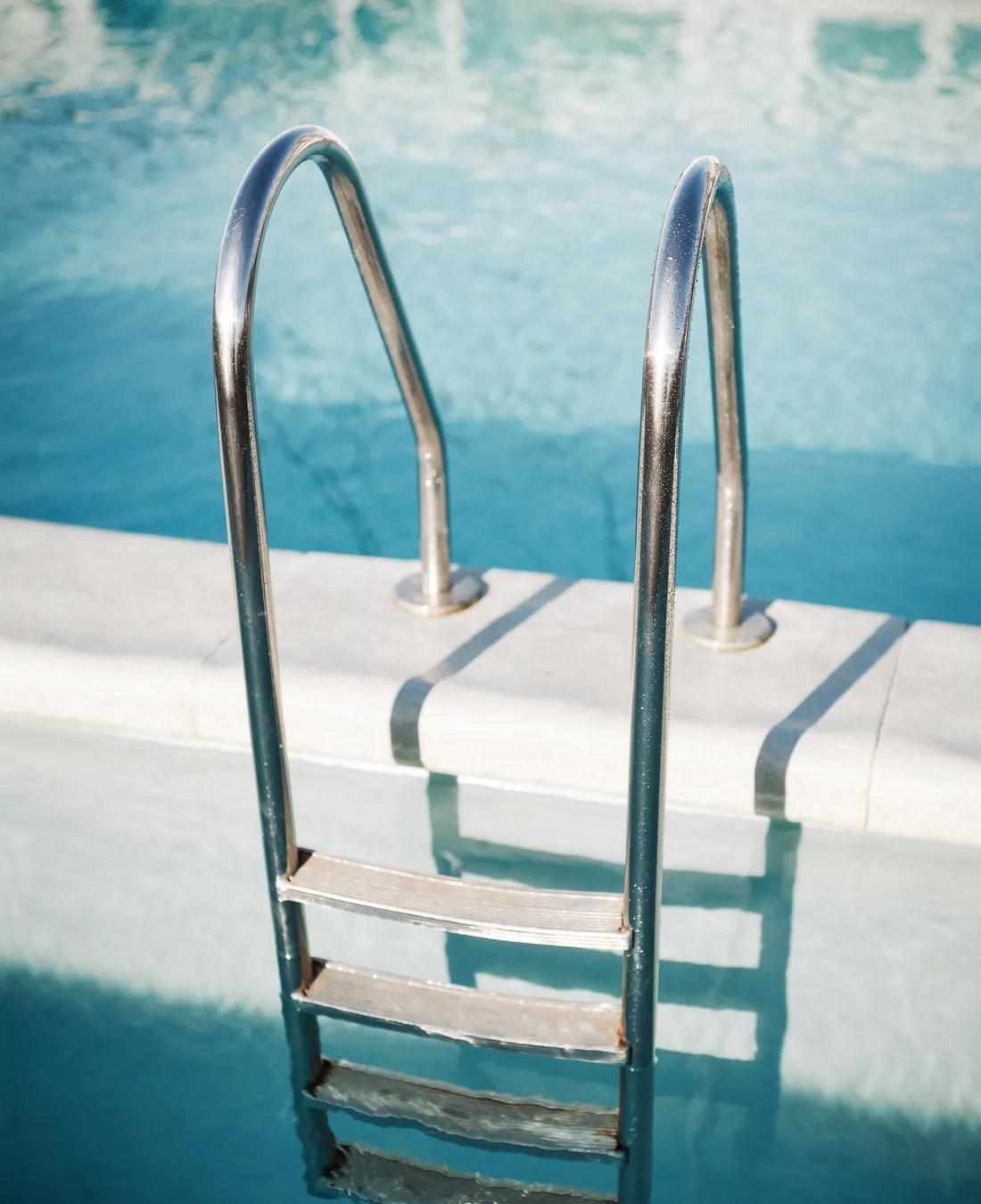
Stainless in soft water is where low calcium shows up first, months before the liner does.
The waterline tells you most of this before the kit does.
A grey chalky band on the ladder legs and the tile is scale, which means numbers four and five are high. A liner whose pattern has gone pale in a ring at the surface is chlorine sitting too high for too long. Rough plaster underfoot on the steps is calcium being taken out of the surface.
None of it replaces the test. It does tell you which of the seven to look at first, standing on the deck, before you have opened anything.
7. Water level
Halfway up the skimmer mouth
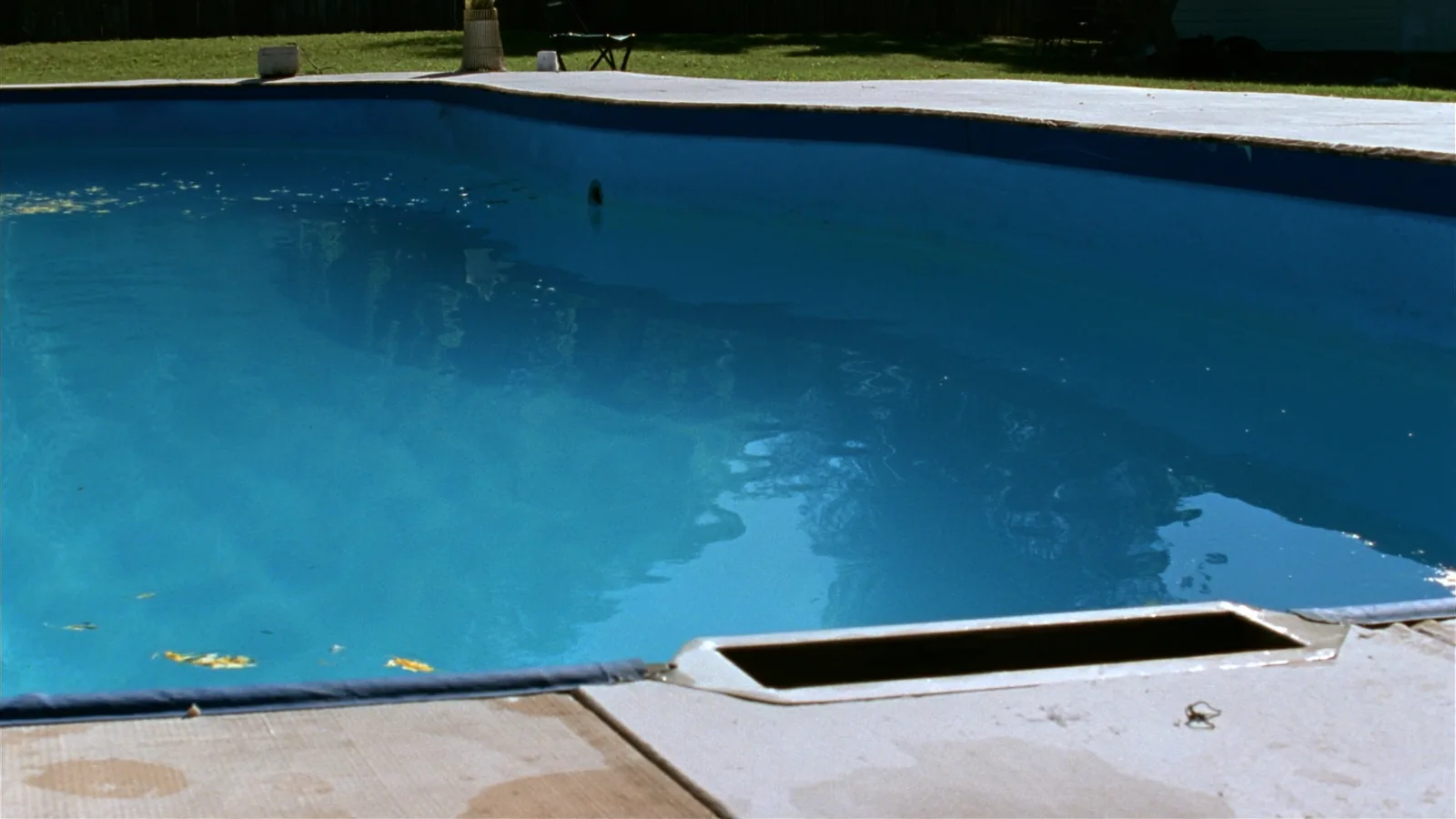
The simplest one, and the one that causes the most expensive single failure in the trade. Below the skimmer mouth the pump pulls air instead of water. An hour of that costs a pump. After the kind of week in August where nobody looks at the pool, this is what we arrive to.
Too low
Skimmer gulps, pump loses prime, seal burns. Top it up with a hose before you do anything else. If it drops again in three days, you have a leak rather than evaporation.
Too high
Skimming stops working, because the surface film the skimmer exists to remove floats past the mouth. Everything looks fine and the water is dirty.
Homeowner jobYes. A hose.Leak location, if it keeps dropping$185 flat
What it costs
Printed prices, which took two minutes and nobody in this market does it.
Weekly route pricing covers an average residential pool up to 24,000 gallons within fifteen miles of Smithville. Chemicals are included in the route price rather than billed on top, because billing them on top gives a service company a reason to use more of them.
Prices held from 1 April. Larger pools, saltwater cells and anything past Kearney or Plattsburg are quoted before the first visit, not after it.
The same visit, half as often. Honest note: in July this is not enough for most pools.
$95 / month
Opening
Cover off, cleaned and folded, equipment reassembled, system started, first balance, one week follow-up.
$325
Closing
Balanced for winter, lines blown and plugged, equipment drained, cover on and secured.
$345
Green to clean
Flat rate. Filter cleaned, shocked, treated, vacuumed to waste, returned in five to ten days.
$420 to $650
Vinyl liner replacement
Measured, ordered, old liner out, new liner set and filled. Two to three weeks for the liner to arrive.
$3,200 to $5,400
Pump or filter replacement
Parts and labour. Variable speed pumps pay for themselves in about two seasons at current rates.
$900 to $1,900
Diagnostic call
One hour on site, every reading taken, written findings. Waived if you go ahead with the repair.
$85
Two things we will tell you that cost us money. A pool over about twenty-five years old with a failing wall panel is worth filling in rather than relining, and we will say so before we quote the liner. And a green pool in the second week of September is usually worth closing rather than clearing, which is a $345 job instead of a $650 one. Both of those have happened this year.
The year
When we come, and when the route is full.
The route fills in March. It is not a sales tactic, it is that one truck does about forty pools a week and the forty-first has to wait for somebody to sell a house.
March
Route booking opens and closes, usually inside three weeks. Openings scheduled. Liner orders placed now arrive in time for May.
April
Openings, roughly a hundred and forty of them, in the order they were booked. Cold water and a green pool is normal and not a problem.
May to August
Weekly route runs Monday to Friday. Same day, roughly the same hour, and you do not need to be home. Repairs fit around it, so a Wednesday breakdown is usually a Thursday or Friday fix.
September
The route continues to the end of the month. The best time of the year to swim in this county and the month most people stop.
October
Closings. Booked from August. A pool closed after the second hard freeze can crack a skimmer, and that is a $400 repair to save a fortnight.
November to February
Equipment work, liner measuring, heater and pump replacement. The cheapest and calmest time to have anything done, and almost nobody uses it.
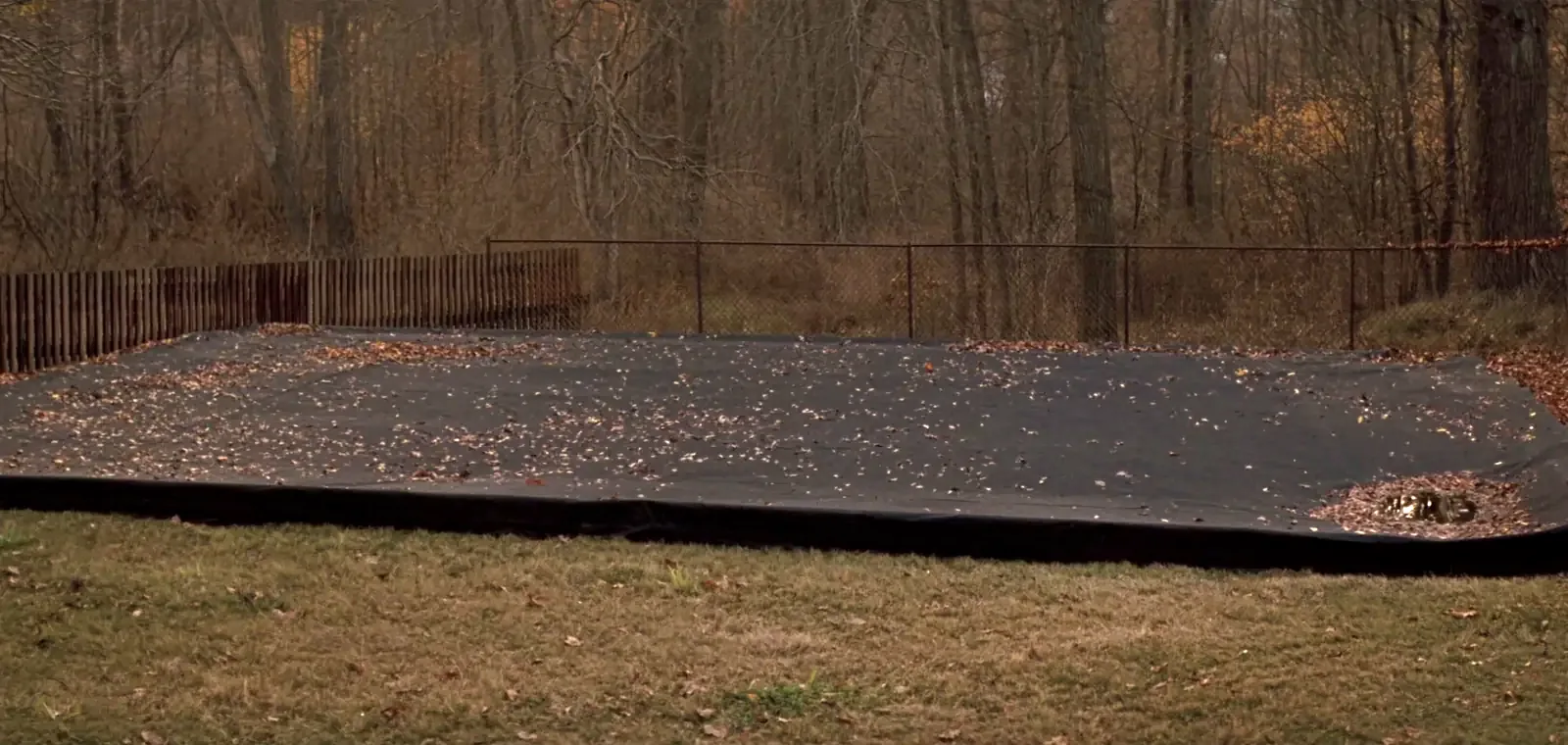
October. The cover is mesh rather than solid, which means rain goes through and leaves do not, and it is the reason spring openings on these pools take an hour instead of a day.
Bring a bottle of water in. There is no charge and no obligation.
Half a litre, elbow deep, away from the returns, same day. All seven numbers on a printed sheet with what to do about them. If the answer is a nine dollar bottle of acid, that is what the sheet will say.
Telephone
(816) 555-0157
Answered 8 to 5 Monday to Friday, and Saturday mornings April to September.
Where
1140 South Commercial Avenue Smithville, Missouri Behind the building, gravel lot, water testing at the side door
Service area
Smithville, Kearney, Paradise, Trimble, Holt, Liberty and north Kansas City. Plattsburg and Lathrop on Fridays only.
Emergencies
A pump running dry, water pouring out, or a stuck cover are same day. Green water is not an emergency and will be scheduled.